Momenta targets Dubai and Europe as it seeks thousands of robotaxis in 2027
The Mercedes-backed Chinese company expects its global fleet to rise from hundreds of vehicles at the end of 2026 to several thousand a year later.
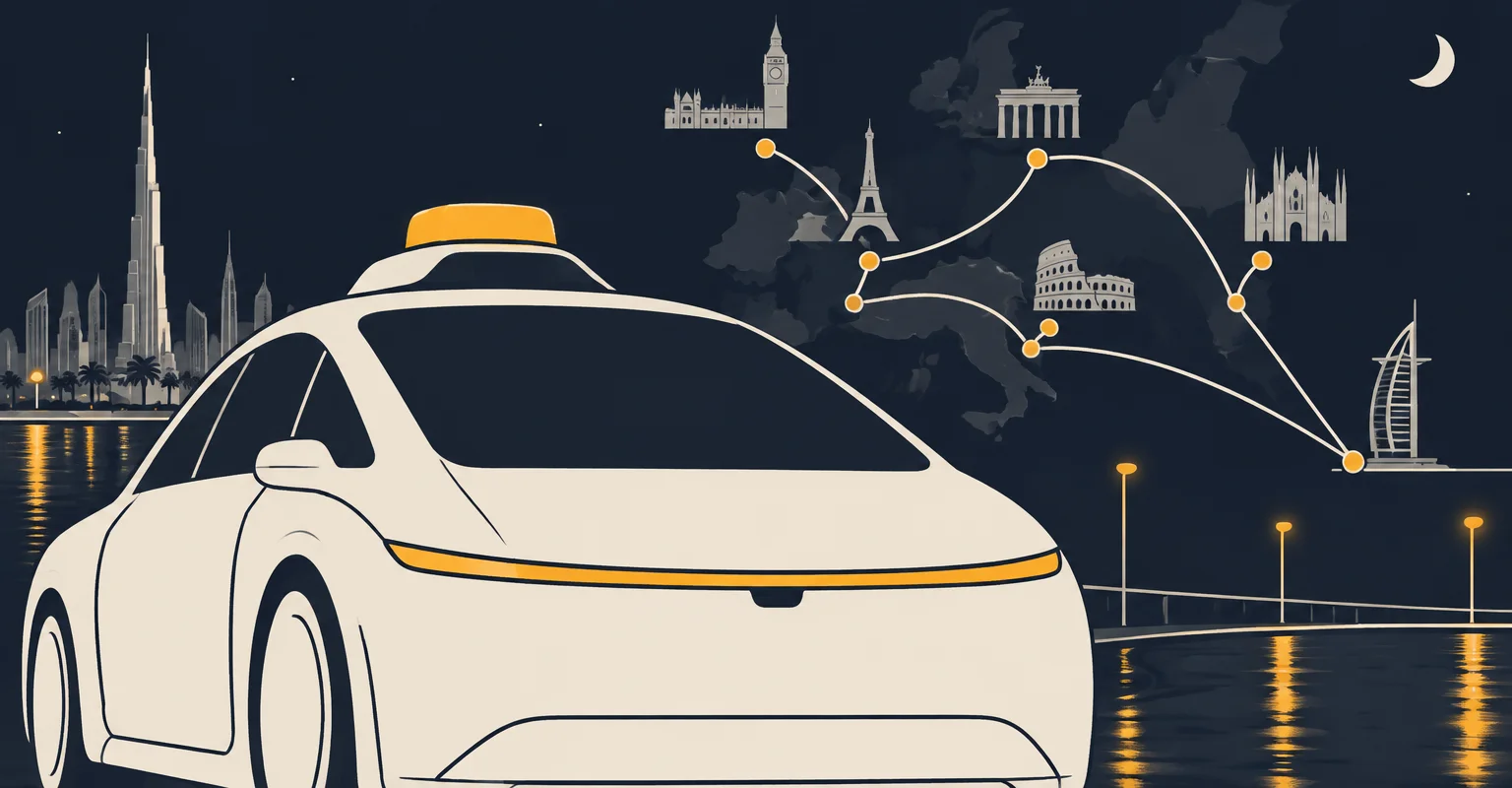
Momenta plans to expand its robotaxi operations to Dubai and additional European cities in 2027, with a goal of operating several thousand vehicles globally by the end of that year. The Mercedes-Benz-backed Chinese autonomous-driving company expects its fleet to be in the hundreds by the end of 2026.
The company was already testing robotaxis in five Chinese cities, Munich and Abu Dhabi, and had deployed more than 100 vehicles across three countries, according to reporting published by KELO. It has held discussions with several European cities about further expansion and identifies Japan as another priority market.
Dubai is a particularly contested destination. WeRide had launched fare-charging fully driverless rides in the Jumeirah and Umm Suqeim districts through Uber’s app, while Baidu’s Apollo Go said riders could hail fully driverless vehicles through its own app from April 1. Pony.ai had also received permission from Dubai’s Roads and Transport Authority to test autonomous driving in the city.
Chinese robotaxi operators have expanded into the wider Gulf market. Abu Dhabi and Dubai seek to make 36% of all trips driverless by 2040. Momenta’s planned Dubai deployment would follow its testing in Abu Dhabi, but the evidence does not specify the size or operating model of its Dubai fleet.
In Germany, Momenta obtained an L4 autonomous-driving test licence from the Federal Motor Transport Authority that permits urban-road tests across the country without seeking approval city by city. The company and Uber selected Munich in 2025 as the debut city for a cooperative robotaxi project intended to connect Momenta vehicles to Uber’s platform.
Momenta was founded by a former Microsoft researcher and counts Mercedes-Benz among its backers, with Toyota and BYD as partners. Its two principal businesses are advanced driver-assistance software sold to carmakers and robotaxis. It competes in the latter market with Alphabet’s Waymo and Pony.ai.
The company raised about $751 million in a Hong Kong initial public offering in July, but its shares had fallen about 45% from the IPO price amid caution over Hong Kong-listed artificial-intelligence stocks. Momenta remained unprofitable while spending heavily on research and development.
It is also working with XHeart on chips tailored to its autonomous-driving software. XHeart is developing the next-generation X9 chip, which Momenta’s robotaxi business head Shuo Xie said the company hoped would host many of the vehicles it deploys worldwide within a few years.