Tallinn Airport removes onboard operator from autonomous shuttle service
Auve Tech’s remotely supervised MiCa vehicles now move Magnetic MRO staff and equipment between airside facilities
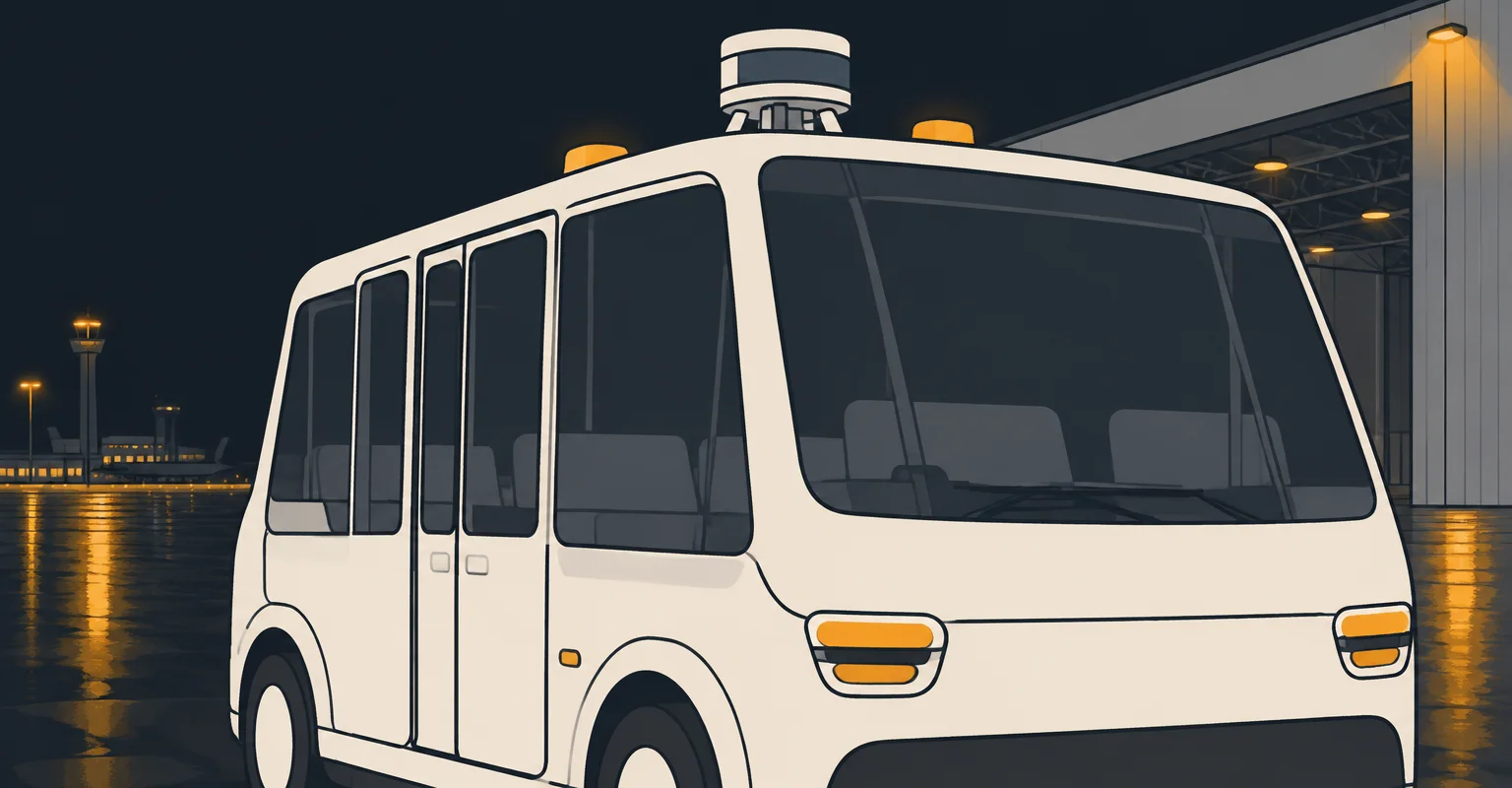
Auve Tech has removed the onboard safety operator from its MiCa autonomous shuttle service at Tallinn Airport, following authorization received in August. The service operates on the airport’s airside under remote supervision, carrying Magnetic MRO employees and equipment between facilities rather than running as a closed-course trial.
A demonstration on Oct. 7 showed the vehicle operating in the live airport environment without a person inside the shuttle. Magnetic MRO said autonomous transport had already formed part of its daily operations for several years before the operator was removed.
Auve Tech and Tallinn Airport have described the authorization as making Tallinn the first European airport where an autonomous vehicle has been allowed to operate without an onboard safety operator. The companies began testing in the airport area in 2023 and moved to commercial operations in 2025.
The MiCa is an Estonia-made, electric Level 4 shuttle that can carry up to eight passengers. It uses cameras and LiDAR to perceive its surroundings, while a remote operations centre can monitor and support it when necessary. One supervisor can oversee several vehicles, rather than requiring a driver or safety operator in each shuttle.
The vehicles link Magnetic MRO hangars across the airport and travel about 1,000 kilometres a week. Auve Tech puts their average autonomy rate at 99.9%, though Airport Industry-News noted that the company has not specified the methodology behind that measure.
Risto Mäeots, chief executive of Magnetic Group, said the shuttles support the continuous movement of people and supplies between hangars and help the company manage the final stage of its internal logistics. Kaarel Variksaar, Auve Tech’s chief executive, said remotely overseeing multiple vehicles was a key step toward making autonomous transport economically competitive and scalable.
Tallinn Airport’s Riivo Tuvike said the airport’s safety requirements, rules and procedures provide conditions for building the experience needed for wider use of autonomous mobility. The operation remains subject to airport-specific safety procedures even as it replaces the onboard operator with remote monitoring.