TfL says London has yet to receive a driverless robotaxi consent application
The authority is still preparing its guidance and wants powers to halt operations over safety concerns
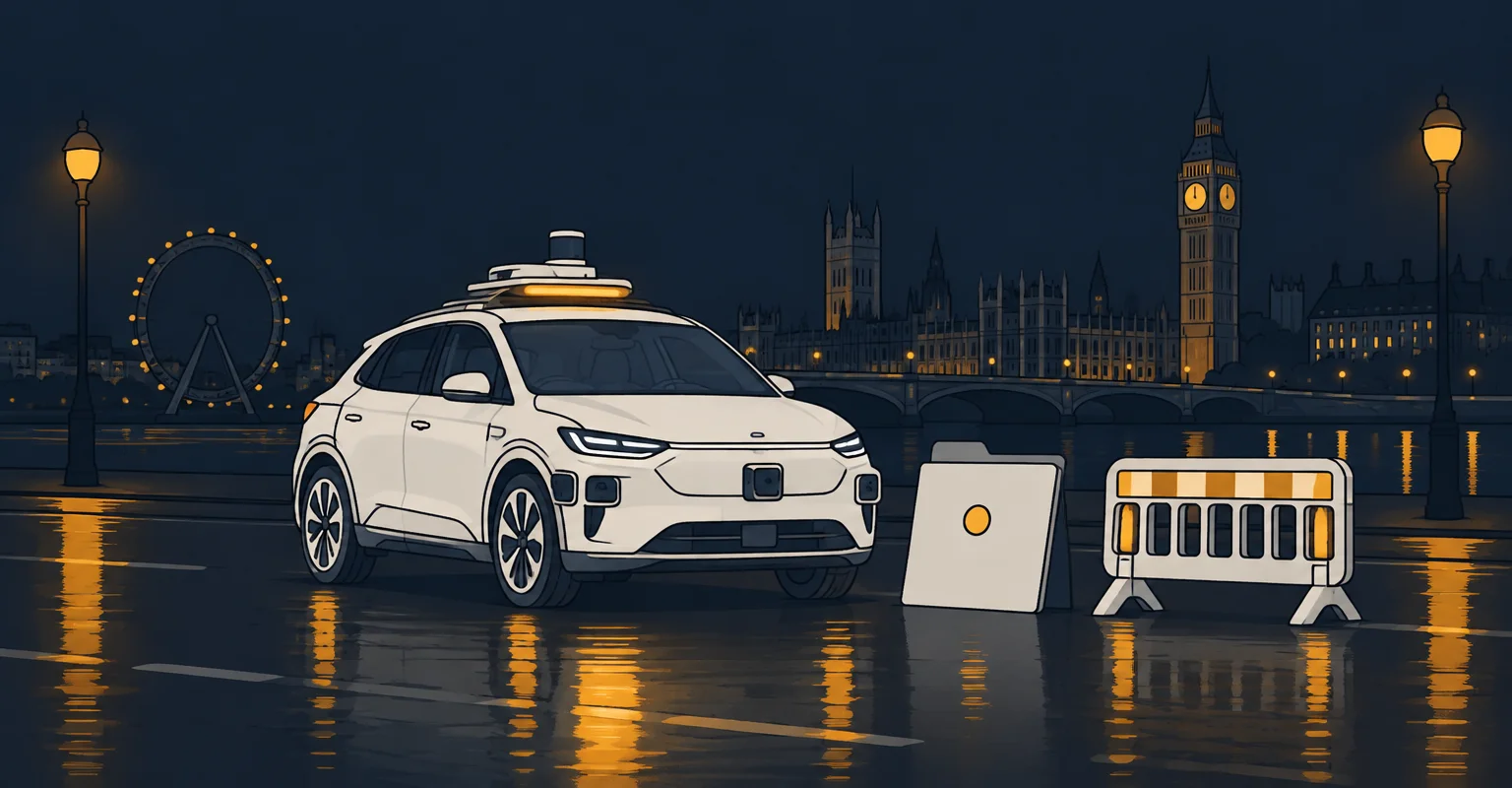
Transport for London has said no operator has yet reached the stage of seeking its consent to run fully autonomous passenger vehicles in the capital, underscoring the gap between the city’s supervised trials and a driverless commercial service.
Applications for Automated Passenger Service permits opened on May 15, but no vehicle had been listed under the Automated Vehicles Act 2024 when TfL gave evidence to the London Assembly Transport Committee. TfL has also yet to publish guidance setting out what an applicant must provide to secure its consent, and Christina Calderato said that document would not be ready “for some time.”
The distinction is important because current trials are not fully driverless. The Department for Transport requires a safety driver in every vehicle, while TfL has little authority over those trials beyond requiring those drivers to hold an existing licence for commercial operations in London. Waymo, Wayve with Uber, and Baidu have been testing vehicles on London streets for several months under that arrangement.
Wayve is the only operator currently offering bookable rides through Uber, with 15 vehicles serving the city. Uber launched those supervised Wayve-powered rides on Sept. 3, using electric Ford Mustang Mach-Es equipped with the company’s AI Driver and surround sensors.
A future fully autonomous operator would first apply to the Driver and Vehicle Standards Agency for a permit, then require TfL consent to operate in London. TfL has six weeks to decide; if it does not respond, consent is automatically deemed granted. The transport authority cannot decide whether the national agency approves a vehicle and, under the current arrangement, cannot suspend or withdraw a permit after it has been issued.
TfL told the committee it wants the ability to suspend operations when it identifies a safety issue. Calderato said the authority did not want to obstruct services, but wanted to be robust because it lacked an ongoing power over them. TfL said it was pursuing a Vision Zero level of safety, while vehicle-safety responsibility rests with the Vehicle Certification Agency.
This develops the Transport Committee’s earlier call, as reported this month, for stronger TfL powers over autonomous passenger services. Its final report recommended a cautious deployment approach, a formal route for TfL to request permit suspensions during the pilot framework, and safety reporting on crashes and near misses within 24 hours.
The committee also recommended that the full regulations expected in 2027 devolve powers to issue and withdraw permits, and to set operator conditions, to TfL. It found substantial uncertainty over the effect of autonomous passenger services on congestion and the wider public-transport network, and urged assessment against a strict Vision Zero standard.
TfL said autonomous vehicles should complement rather than compete with London’s public transport network. It also said conventional taxis and private-hire vehicles would retain a role, particularly for passengers travelling with luggage or requiring accessible services.
See also
- City: London
- Operators: Waymo, Wayve, Uber, Baidu Apollo Go