Denver police lack a way to ticket driverless cars for moving violations
Parking citations remain available, while city agencies explore assigning traffic tickets to an autonomous vehicle’s registered owner.
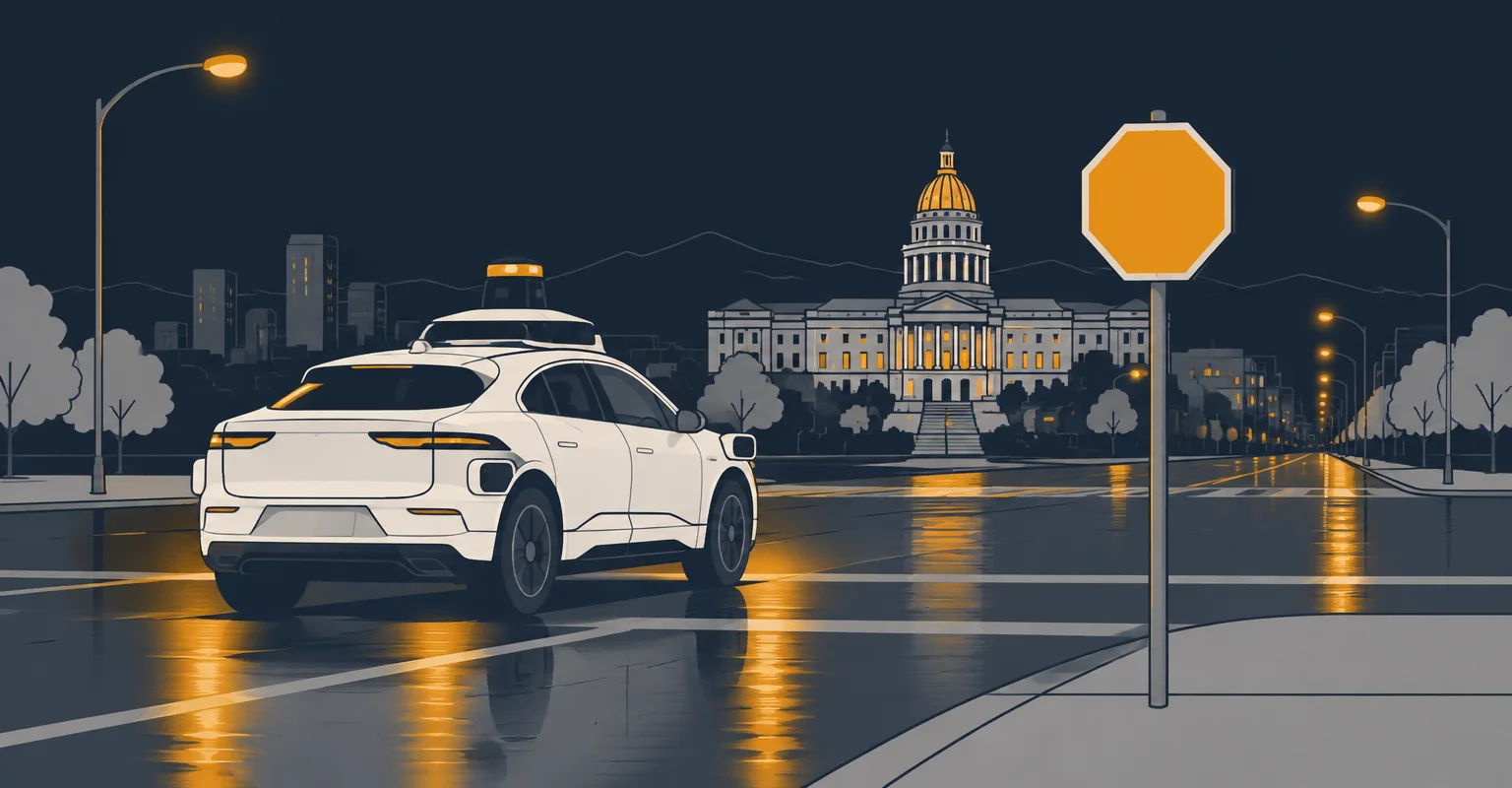
Denver police said they cannot issue a traffic-infraction citation when an autonomous vehicle has no human driver behind the wheel, exposing a gap in the city’s ability to enforce moving violations by driverless cars.
The problem applies to conduct such as speeding, running a stop sign or entering a closed street. Police say neither Colorado law nor Denver’s municipal code currently provides a mechanism to assign a citation in those circumstances. Jay Casillas, a Denver Police Department spokesperson, said that updates to both state law and city ordinance would likely be needed.
The limitation does not extend to vehicles with a person at the wheel. A human driver remains subject to citation even if they say automated-driving technology was operating, and can challenge a citation in court.
Denver’s Department of Transportation and Infrastructure can issue parking citations to autonomous vehicles. Those tickets are separate from citations for moving violations, however, and do not resolve the question of how to enforce traffic laws against a vehicle with no driver.
The Police Department, City Attorney’s Office and transportation department are exploring options, including legislation that would allow moving-violation citations to be issued to an autonomous vehicle’s registered owner. State Representative Sheila Lieder has also said additional guardrails are needed and was considering further state requirements for autonomous vehicles. Representative Chad Clifford was exploring legislation for the coming session and had floated a ballot initiative to ban autonomous vehicles.
The issue gained urgency after Waymo began robotaxi service in Denver in October. As of The Denver Gazette’s Nov. 2 report, police had identified one crash involving a Waymo vehicle with an attached police report, but had issued no citations or warnings involving Waymo vehicles. The August crash occurred after a driver rear-ended another motorist, pushing that vehicle into the back of a Waymo.
Waymo vehicles also drew attention after one entered a newly paved road near Sloan’s Lake while construction workers were present, and others passed barricades to enter a farmers market. The company’s vehicles are designed to pull to the right when approached by emergency vehicles, allowing officers to communicate with a Waymo team available around the clock.
Colorado already has a separate law governing notices generated by automated vehicle identification systems. Senate Bill 23-200, approved in 2023, permits notices to be delivered personally or by mail and bars jurisdictions from requiring an owner to identify the driver, while allowing owners to submit evidence that they were not driving. Its provisions took effect in 2023 and 2024.
California and Tennessee have enacted laws creating ticketing mechanisms for moving violations involving autonomous vehicles, according to the National Conference of State Legislatures. Denver officials’ proposed owner-liability approach would require changes in Colorado as well as in the city code.