ROii’s Japan debut is a supervised Level 2 trial, not a Level 4 service
The free Kinosaki Onsen shuttle trial tests a vehicle developed by a Korea-based company on narrow resort streets through Dec. 4.
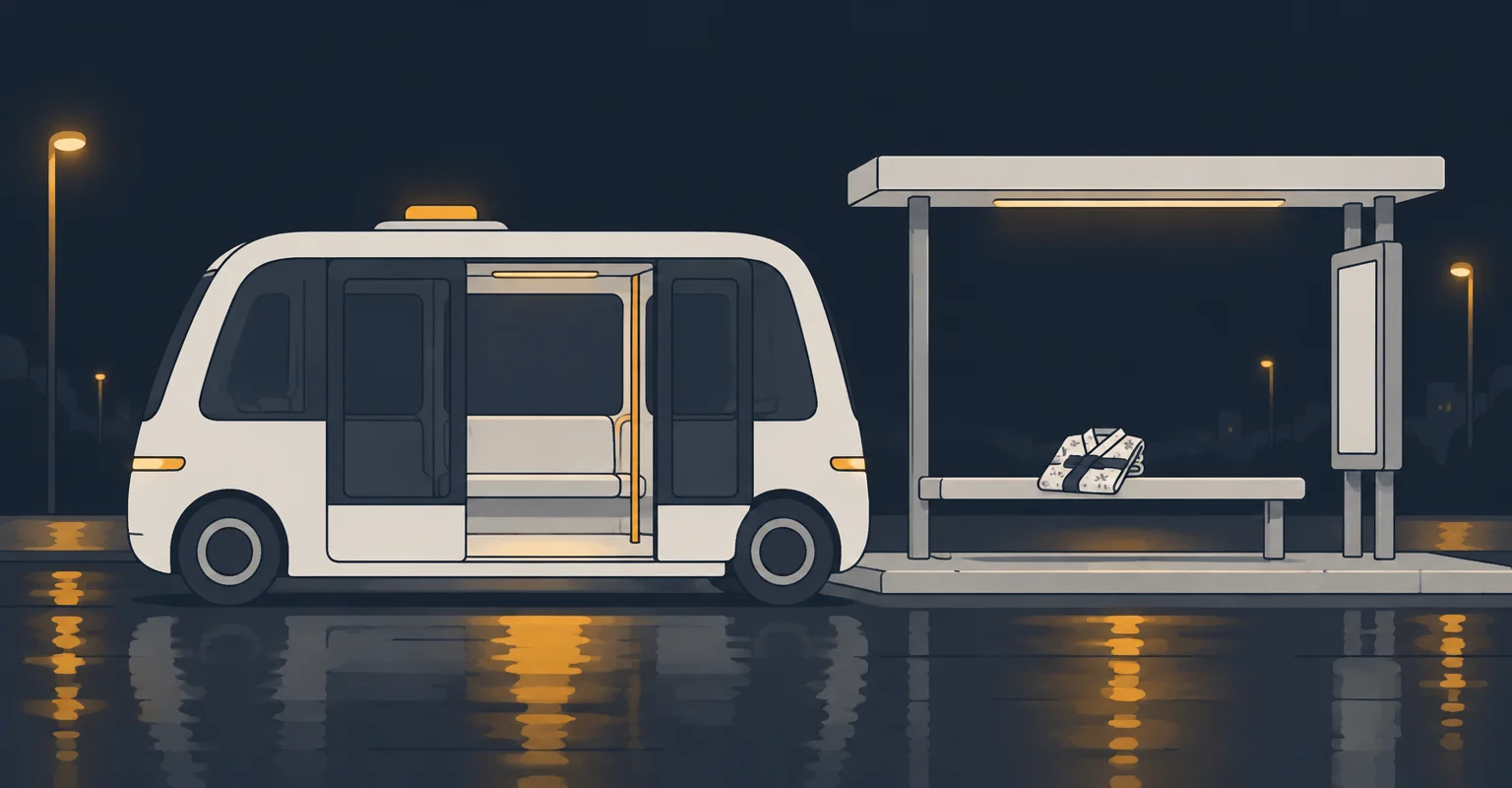
A trial of Autonomous a2z’s ROii shuttle began in the Kinosaki Onsen district of Toyooka City, Hyogo Prefecture, on Nov. 6. It is the Korean company’s first deployment of ROii in Japan and Toyooka’s first autonomous-bus demonstration project.
The vehicle was developed as a Level 4 platform, but the present service is operating at Level 2 with a safety driver aboard. The trial is intended to build toward full-scale Level 4 operation rather than constitute a driverless Level 4 service itself.
Passengers can ride free on three weekday journeys over a 1.8-kilometer, five-stop route from Kinosaki Onsen Station toward the Kinosaki International Art Center. The shuttle runs at speeds below 20 kilometers per hour.
ROii was completed in 2024 and was designed without a driver’s seat, with capacity for up to 11 passengers. For the Japanese demonstration, A2Z converted it to right-hand drive for left-side traffic, adapted its automated-driving system to local conditions and modified part of the interior for the onboard safety driver.
The vehicle also has a wide-opening sliding door intended to help tourists in yukata and older passengers board and alight. Kinosaki Onsen’s narrow streets are shared by pedestrians, residents’ cars and tourist vehicles, making congestion and safety central concerns for the test.
Toyooka selected the resort district to assess a sustainable autonomous-mobility model that could address visitor movement and residents’ everyday transport. The city faces driver shortages, falling ridership, reductions and cancellations of bus routes, as well as population decline and ageing.
Kanematsu, selected by the city as the project contractor in October, is coordinating the programme. Zentan Bus operates the service; Sompo Japan provides risk assessment and autonomous-driving insurance; KDDI supplies communications and remote monitoring; and A2Z provides the vehicle, software, control systems, data analysis and local technical support.
The partners will use driving and communications data, remote-monitoring results, operational experience and passenger feedback to develop a model suited to local conditions. Japan’s Road Traffic Act has provided a permission system for specified Level 4 driverless operation since April 2023, but such operation remains distinct from Kinosaki’s supervised Level 2 trial.
The demonstration runs through Dec. 4, with its results intended to inform consideration of a future Level 4 service.
- Operator: Autonomous A2Z
- Tag: Level 4