Portland weighs robotaxi guardrails before a possible Waymo launch
The proposed framework would cap fleets, require 50,000 local test miles and fund support for drivers affected by automation.
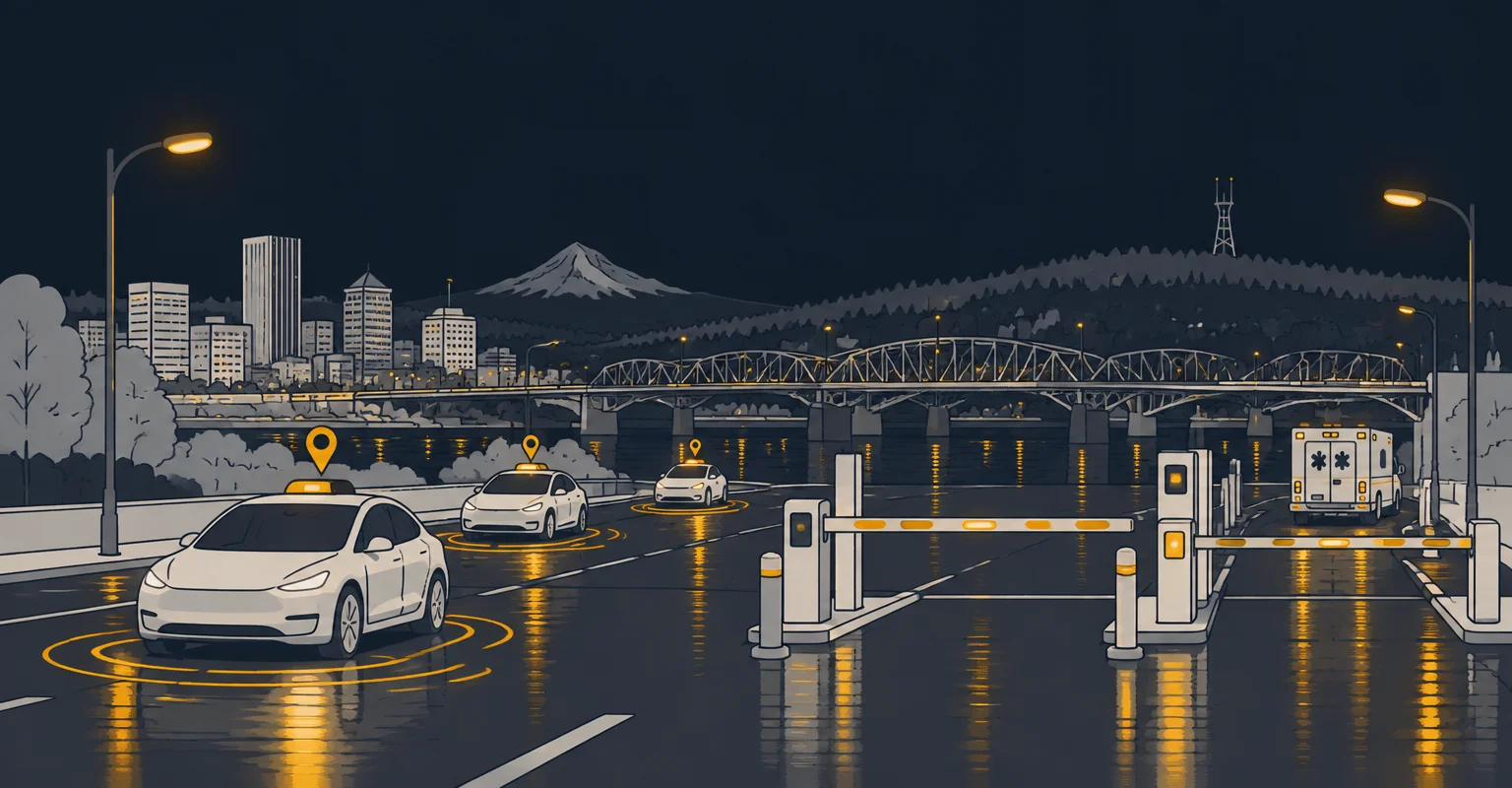
Portland’s Public Works Committee has begun considering a proposed framework for paid robotaxi service, setting out local conditions before any potential Waymo launch. The Portland Bureau of Transportation proposal would limit each company to 75 vehicles and cap the citywide fleet at 225 driverless taxis in its first year.
Companies would have to complete 50,000 miles of local testing before charging for rides: 25,000 miles with a human driver and 25,000 without one. They would also need to submit passenger-safety and first-responder plans, share crash and trip data with the city, use all-electric vehicles registered in Oregon and operate only in city-approved service areas.
The framework would require data on fleet mileage, trip volumes and timing, origins and destinations, and passenger wait times. It would include a per-trip driver-support fee intended to assist taxi and rideshare workers affected by automation, while allowing the city to suspend a permit after repeated traffic violations. Companies would be barred from selling data collected through their vehicles.
Waymo began manual mapping in Portland in April, and its vehicles have been operating with licensed human drivers. General Motors has also been mapping city streets with human drivers. PBOT says no automated-vehicle testing permits have yet been issued, though companies have expressed interest.
The proposed rules would replace a significant restriction in Portland’s existing framework. The city adopted its permit system for testing automated vehicles in 2018, but that version did not allow for-hire automated vehicles to operate. PBOT began updating the rules in late 2025 to cover both testing and commercial service.
Public feedback has underscored the difficulties facing the proposal. PBOT received more than 220 comments after opening a 45-day consultation in February and extending it through April 10. Safety was mentioned in 52% of comments, while accountability and enforcement appeared in 35% and labor impacts in 34%.
Driver’s Union Oregon has called for robotaxis to be kept out of Portland. Its organizer, Nathaniel Hudson-Hartman, said workers concerned about the technology include immigrants, retirees and people with disabilities who rely on rideshare earnings. If the city permits the services, the group wants every automated taxi to carry a licensed Uber, Lyft or taxi driver able to take control in an emergency and help passengers.
Councilor Mitch Green expressed interest in a ban, while committee chair Olivia Clark opposed both a ban and a universal in-car driver requirement. Clark has argued that Portland should establish its own guardrails before the Oregon Legislature could preempt local rules. A bill that would have enabled automated-vehicle companies and preempted local governments, House Bill 4085, failed to advance in 2026; a similar measure is expected to be pursued in the 2027 legislative session.
The committee’s Oct. 13 discussion was not a final vote. It is scheduled to meet again Oct. 27, when members could send a proposal to the full council or table it.
See also
- City: Portland
- Operator: Waymo
- Tag: Robotaxi Regulation