Toronto poll backs supervised Waymo testing but rejects paid driverless rides
Most respondents chose a human-driven car even when a Waymo ride was cheaper.
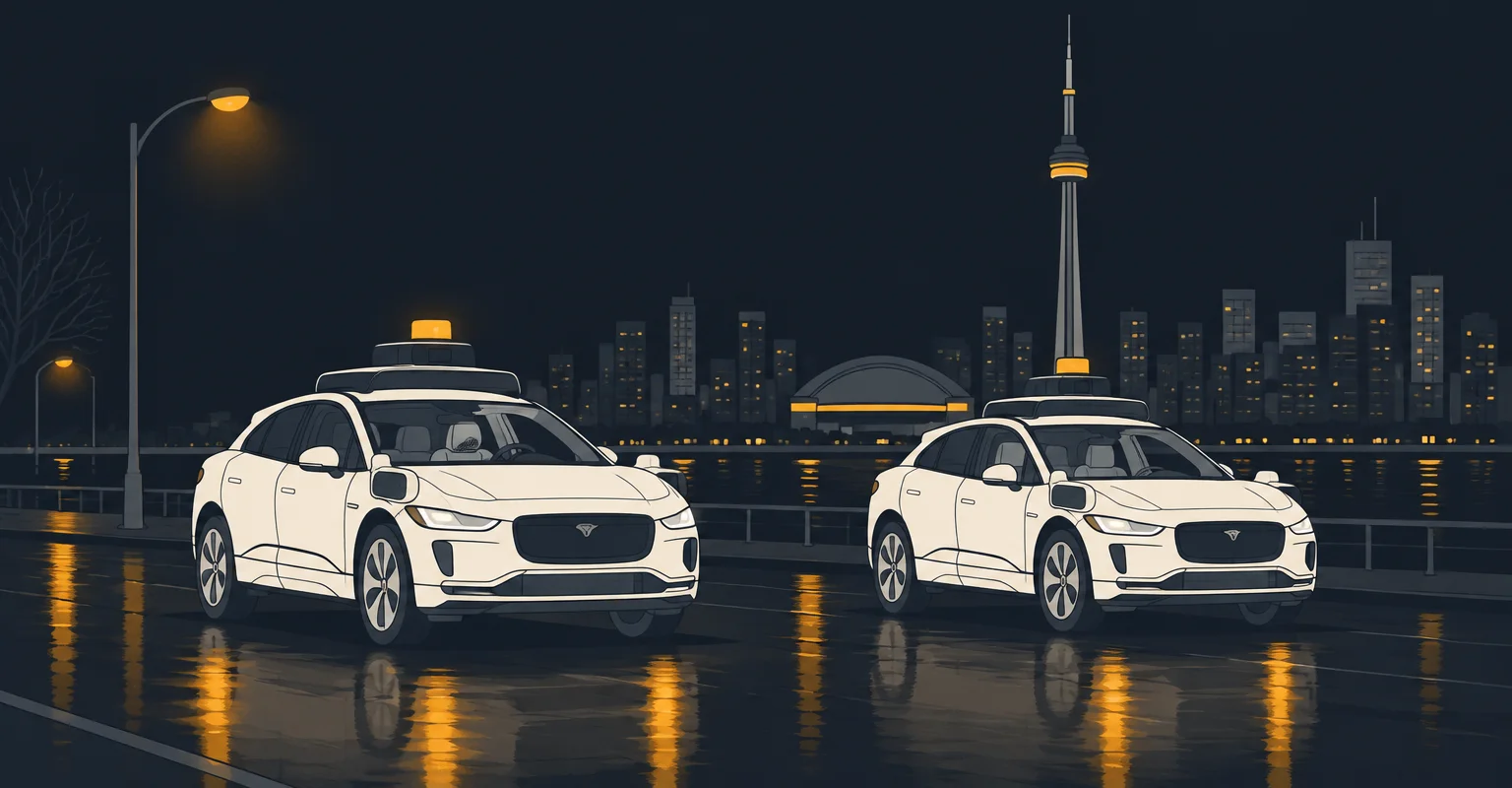
Toronto residents drew a sharp distinction between supervised Waymo testing and a paid driverless service in a new Liaison Strategies survey. While 64% supported allowing the company to test on city streets with a human driver at the wheel, only 36% supported paid rides with no human in the car. A majority, 51%, opposed such rides.
The findings point to support for a cautious, limited next step rather than a broad commercial launch. Thirty-five percent preferred continued testing with a driver and no public driverless rides, while 30% backed a temporary driverless trial in selected areas. Only 11% supported an ongoing paid service, and 18% said Waymo testing should end altogether.
Torontonians also preferred a human-driven car in hypothetical ride choices. When each ride cost $20 and arrived at the same time, 71% chose the human-driven option, compared with 15% choosing Waymo. Even with Waymo priced $5 lower, 59% chose the car with a driver and 27% chose the autonomous option.
Safety concerns were prominent. About 45% thought driverless cars would make Toronto streets more dangerous for pedestrians and cyclists, versus 19% who expected safer streets. Snow and ice were the leading concern for 24% of respondents, followed by pedestrian and cyclist safety at 22%. Another 12% cited possible job losses for taxi and Uber drivers.
Views differed substantially by age. Forty-seven percent of respondents aged 18 to 34 supported paid driverless rides, more than twice the 22% among people 65 and older. Overall, 62% said they were unlikely to use Waymo.
As we reported in October, Waymo began Toronto testing under Ontario’s provincial pilot program, with passenger service planned for 2028. The company has described its local rollout as a phased, safety-first process beginning with mapping and testing with trained specialists behind the wheel.
Liaison surveyed 1,000 Toronto residents on Nov. 14 and 15 by interactive voice recording and random-digit dialing across landline and mobile networks. The results were weighted by age, gender and region against 2021 Census targets; the total-sample margin of error was plus or minus 3.1 percentage points, 19 times out of 20.
See also
- City: Toronto
- Operator: Waymo
- Tag: Winter Driving