WeRide says Guangzhou robotaxi fleet reached positive unit economics
The company cited 21 daily rides per vehicle, but the milestone does not amount to corporate profitability.
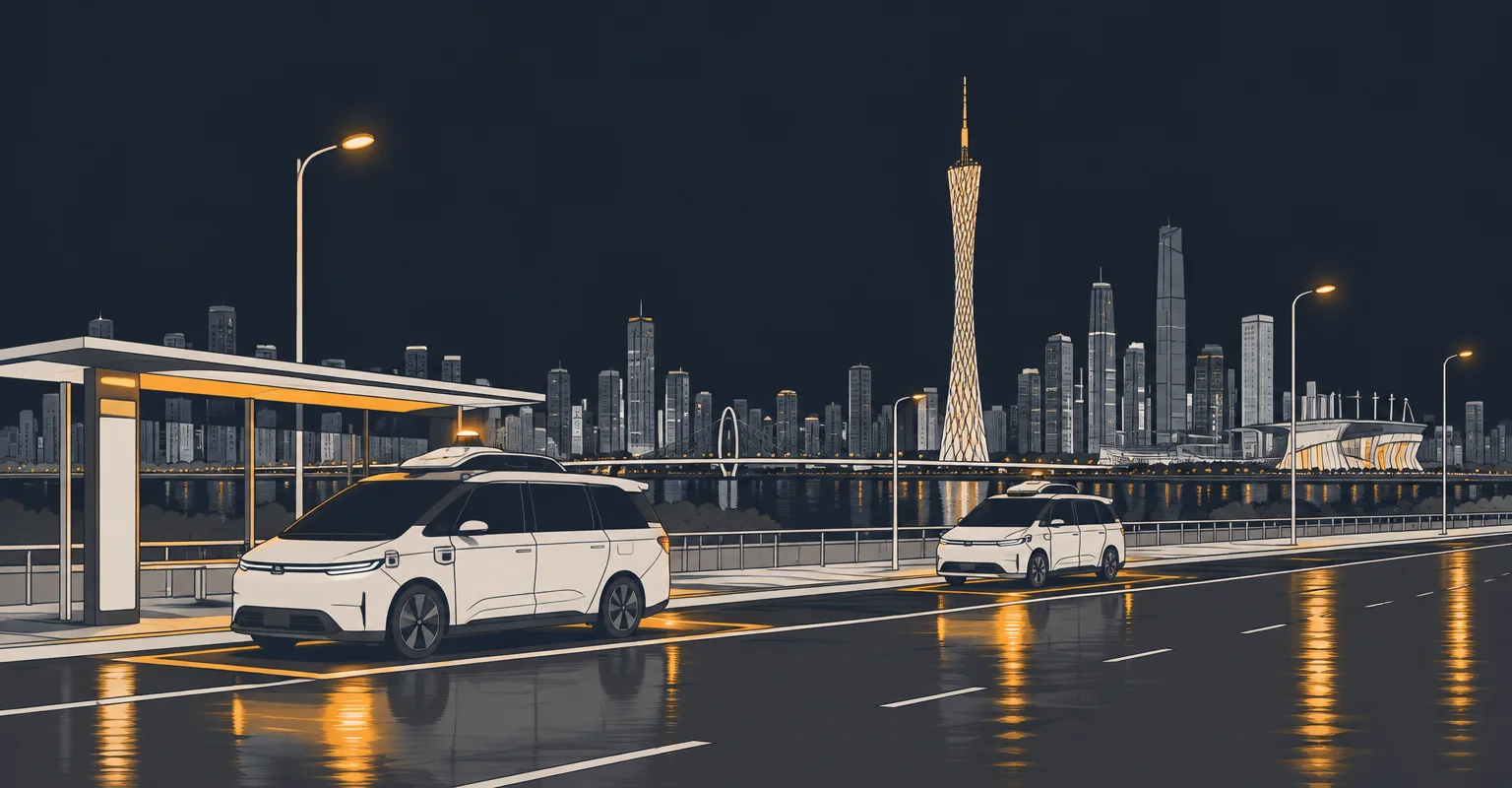
WeRide said its self-operated robotaxi fleet in Guangzhou achieved positive unit economics in the third quarter, a per-vehicle milestone the company presented as evidence that autonomous ride-hailing can become sustainable. The claim does not mean the company as a whole has become profitable.
Average daily rides per Guangzhou robotaxi were 21 during the quarter, unchanged from the previous quarter, and the busiest vehicle-day reached 33 rides. WeRide said those utilisation figures supported the positive economics. Registered users of its WeRide Go service rose 143.5% from the prior quarter.
The driverless service covered Tianhe, Haizhu and Huangpu districts, and WeRide said it planned to extend operations to other core Guangzhou districts by the end of the year. The company began 24-hour fully driverless commercial operations in Huangpu in September 2025, following its launch of a public paid robotaxi service in the district in November 2019.
As we reported Nov. 20, WeRide’s quarterly robotaxi revenue exceeded RMB100 million for the first time, rising 204% from a year earlier. More than 90% of that robotaxi revenue came from overseas markets, however, making the Guangzhou operating result a distinct local measure rather than a statement about the source of most of the division’s revenue.
Total third-quarter revenue rose 88% to RMB321.5 million and gross margin increased to 43.0%, from 32.9% a year earlier. WeRide attributed the margin improvement mainly to growth in its higher-margin overseas and L2++/L3 businesses. Service revenue, which includes robotaxi operating fees, increased 102% and made up 58% of total revenue.
The company’s net loss nevertheless remained RMB310 million in the quarter, although that was 22.6% lower than in the previous quarter. Its global Level 4 fleet stood at about 4,100 vehicles, including more than 2,300 robotaxis.
City News Service has cautioned that positive vehicle-level unit economics should be distinguished from company-wide profitability, which must also absorb research, development and capital-amortisation costs. It cited WeRide’s 2025 adjusted net loss of RMB1.25 billion and research-and-development spending of RMB1.4 billion. A Guojin Securities estimate cited by the outlet put the scale needed to dilute AI research, development and data-center costs at more than 10,000 vehicles in one city and 100,000 nationally.
WeRide said it had reached a turning point in scaling its robotaxi business, combining the Guangzhou result with overseas expansion.