Pony.ai says Guangzhou robotaxi area passed 1,000 square kilometres
Third-quarter robotaxi revenue more than doubled as the company maintained its global fleet target for year-end.
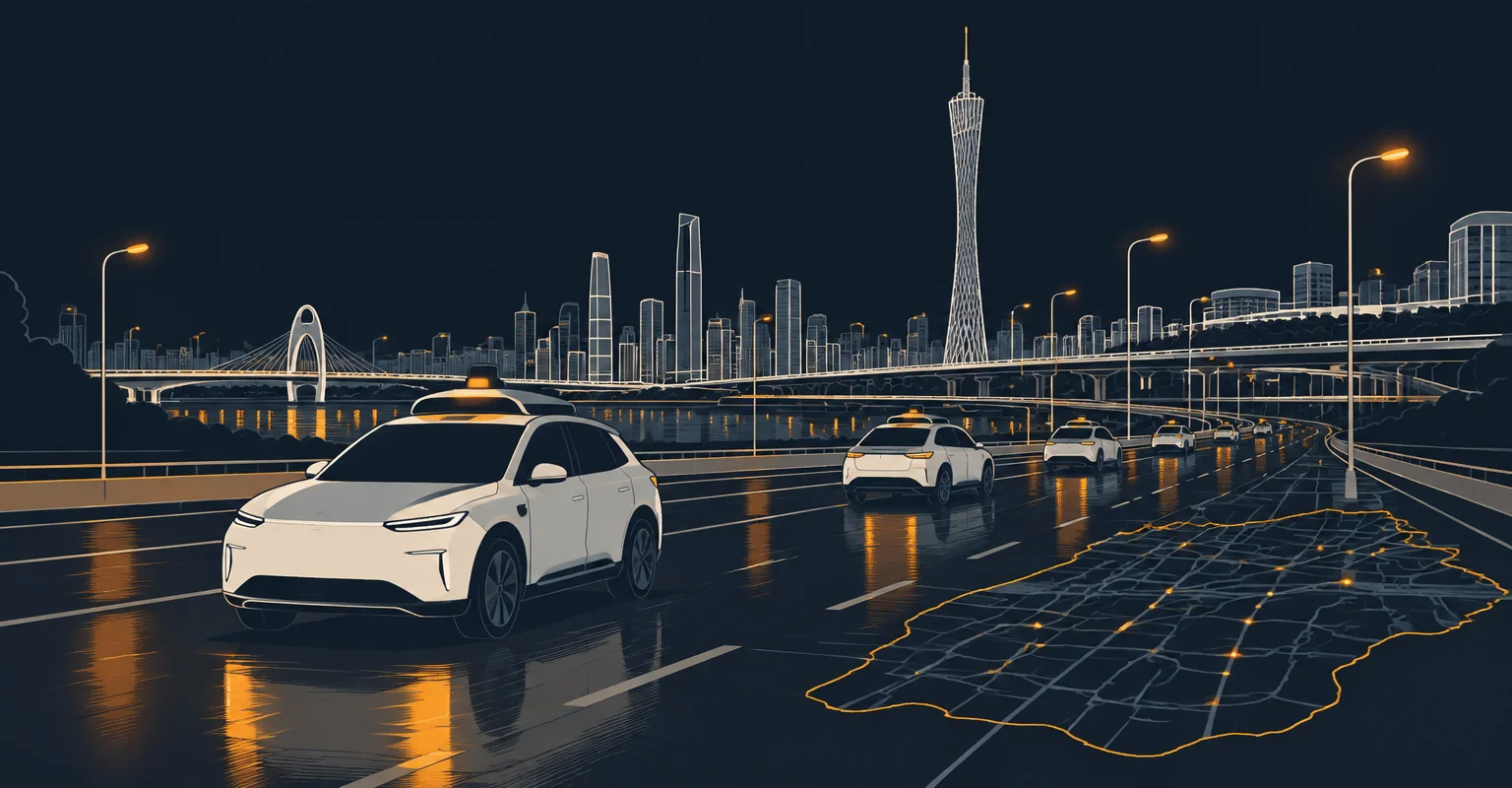
Pony.ai said its contiguous robotaxi operating area in Guangzhou exceeded 1,000 square kilometres, as third-quarter revenue rose 75.2% from a year earlier to $44.6 million. The company’s robotaxi fleet stood at 2,768 vehicles on Sept. 30.
Robotaxi revenue reached $17.9 million, up 165.4% year on year and 47.1% from the previous quarter, accounting for 39.9% of total revenue. Fare-charging revenue grew by nearly 400% from the same period last year, according to the company’s earnings release.
Days earlier, as we reported, Pony.ai and Toyota had put their jointly developed Gen-7 bZ4X robotaxis into fully driverless service in Guangzhou.
Total service revenue was $25.2 million, up 64.8%, while product revenue rose 90.9% to $19.4 million, primarily because of higher robotaxi-vehicle deliveries under the company’s joint-deployment model. Robotruck revenue was about $18 million, up 76.3% from a year earlier.
Losses remained substantial despite the growth. Operating loss narrowed to $68.7 million from $69.7 million a year earlier, helped by higher gross profit. Non-GAAP operating expenses fell 2.3% to $66.2 million, but net loss widened to $136 million, chiefly because of fair-value losses on trading financial assets.
Pony.ai has also begun robotaxi deployments in Hangzhou, Chongqing and Hengqin in Zhuhai. It said it was advancing joint-deployment partnerships in Zagreb, London and Manchester. The Manchester programme began Gen-7 road testing in October, as previously reported, while the company has said its Croatia programme launched Europe’s first fully driverless paid robotaxi passenger test in September.
The company reiterated its target to deploy 3,500 robotaxis in 20 cities worldwide by the end of 2026 and to generate robotaxi services revenue 3.5 times its 2025 level. It said it would continue investing in Gen-7 vehicles and core technology while maintaining spending discipline.
Pony.ai also highlighted PonyWorld, its reinforcement-learning system for post-training its AI driver through simulated traffic scenarios. The company said the system is intended to address long-tail safety problems beyond the limits of human-driving data and support deployment across both robotaxi and robotruck platforms.
See also
- Pony.ai and Toyota put bZ4X robotaxis into driverless Guangzhou service
- Pony.ai begins Gen-7 robotaxi testing in Manchester
- Uber and Pony.ai plan London robotaxi tests
- XPeng gains approval for citywide Level 4 robotaxi demonstrations in Guangzhou
- Baidu says Apollo Go reached 30 cities as Li touts robotaxi safety