Musk says Tesla’s Cybercab would win Dallas riders even at equal fares
Tesla’s cost claim came days after Cybercab rides began in a city already served by Waymo and Uber-linked Avride vehicles.
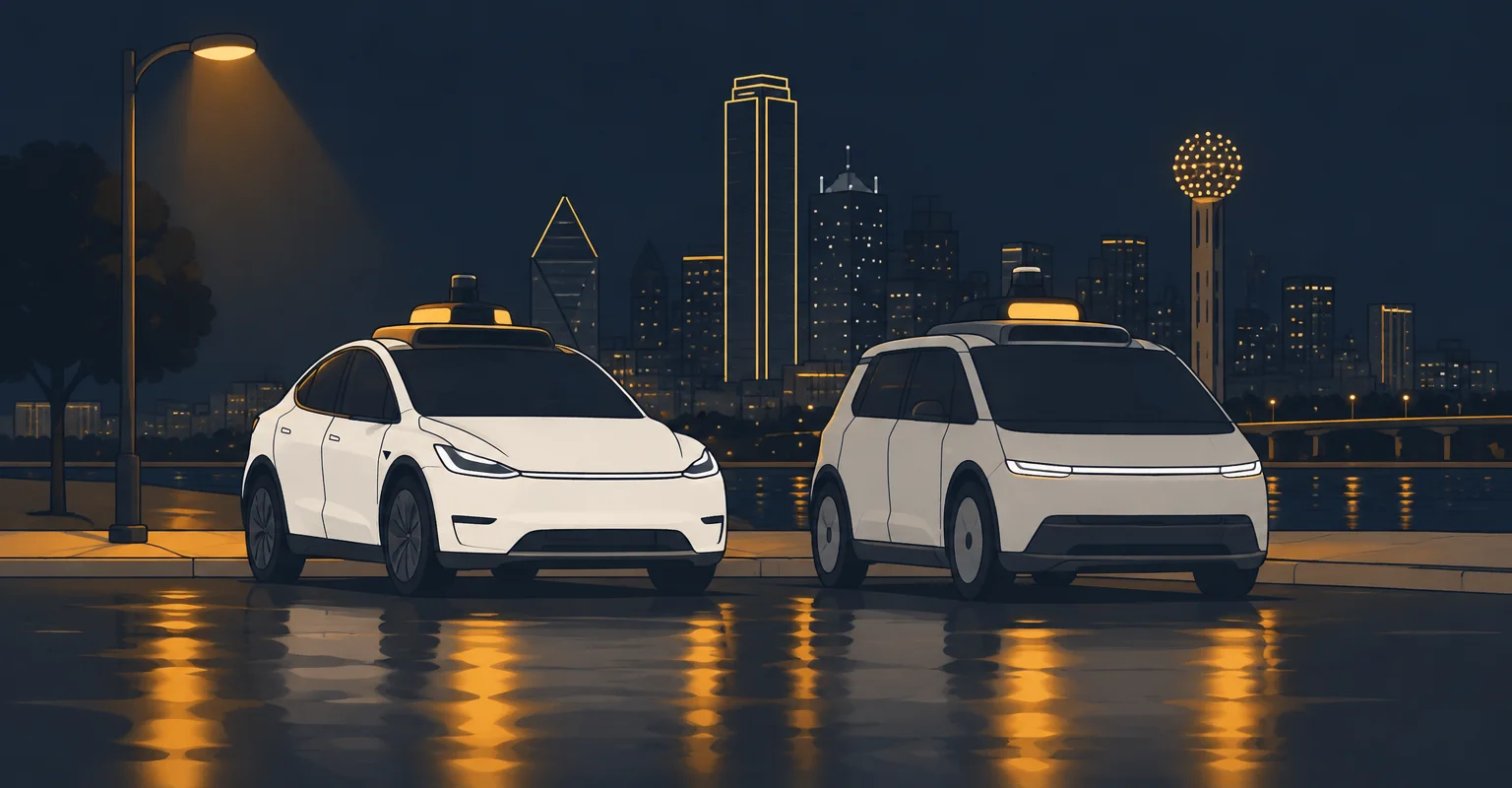
Elon Musk said Tesla’s Cybercab would outperform rival robotaxi services even if riders paid the same fare, arguing that the two-seat vehicle would also have a substantially lower operating cost.
The comment, posted on X on Nov. 22, came three days after Tesla began Cybercab rides in Dallas. Musk wrote: “Most people don’t yet realize that Cybercab would win even at price parity and its cost will be much less.”
His response followed a post by Tesla investor Sawyer Merritt, who said some Dallas riders did not want to use another robotaxi after trying the Cybercab, despite competitors offering discounts. The evidence offered for that rider preference was anecdotal: EVXL noted that the post gave no rider count or other measure of demand.
Tesla’s Robotaxi account announced the Dallas launch on Nov. 19 with the message, “Howdy Dallas. Cybercab has arrived in your city.” Tesla described Dallas as the Cybercab’s second city, after Austin. The launch followed Tesla’s previously stated plan for unsupervised Dallas rides in November, as we reported last month.
The price-parity claim concerns future economics rather than a demonstrated cost result. Tesla’s stated target is to reduce the cost of each paid Robotaxi mile to 30 cents. On Oct. 21, Tesla finance chief Vaibhav Taneja said the company had not yet reached that level, although it saw a path to doing so.
Dallas already has several robotaxi options. Waymo opened its service to all residents and visitors on Aug. 4 after removing a waitlist, allowing riders to hail its autonomous Jaguar I-Pace vehicles through the Waymo app. About 150,000 riders had used the app during the earlier waitlist period, according to TechCrunch.
Uber also matches some Dallas UberX and Uber Comfort requests with Avride robotaxis at no additional cost. Avride’s service uses electric Hyundai Ioniq 5 vehicles and initially covered nine square miles, including Downtown, Uptown, Turtle Creek and Deep Ellum.
Tesla had also operated Model Y robotaxis in Dallas before introducing the purpose-built Cybercab. The Model Y service had run around the clock from Nov. 11. The Cybercab has no steering wheel or pedals and is designed for up to two passengers.
Musk’s intervention therefore placed Tesla’s newly available Dallas vehicle in a direct contest over both fares and the underlying cost of autonomous ride-hailing, while the company’s 30-cent-per-mile target remains unmet.
See also
- Tesla points to Dallas after Austin Cybercab fleet passes 300
- Tesla plans unsupervised Cybercab rides in Dallas in November
- Tesla’s Texas robotaxi registrations pass 500 as Cybercab count surges
- Tesla’s Austin Robotaxi app now compares Cybercab and Model Y waits
- Tesla begins supervised Cybercab testing on Detroit roads