New Jersey unions target driverless rideshare bills at Atlantic City conference
32BJ SEIU and the App Drivers Union used billboards, mobile trucks and taxi advertising to press lawmakers to reject a three-year autonomous-vehicle pilot.
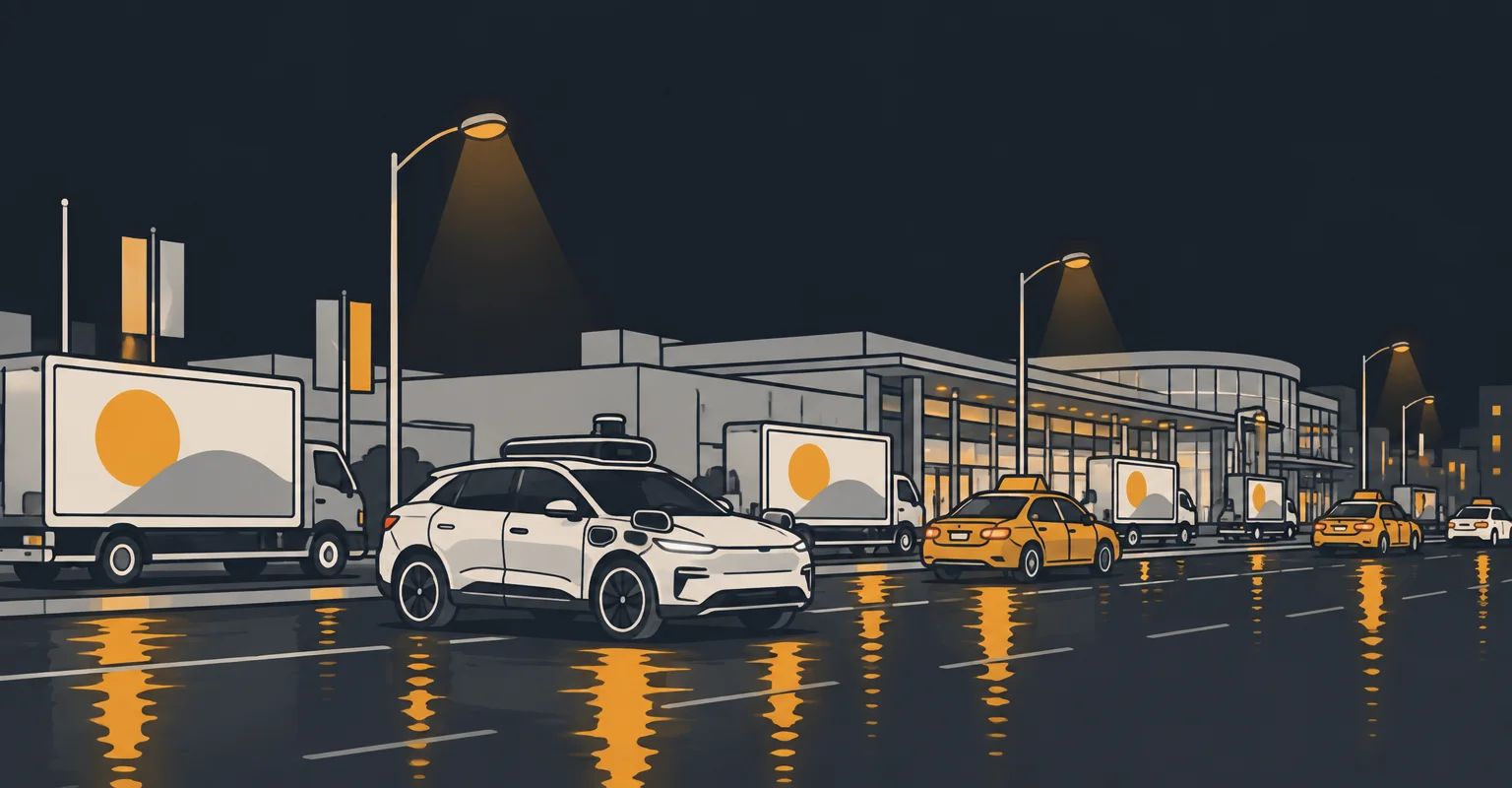
Two unions mounted an advertising and street campaign in Atlantic City opposing New Jersey legislation that would create a pilot framework for fully autonomous vehicles and eventually permit driverless rideshare operations. The effort focused on Waymo and urged legislators to reject Senate Bill 1677 and Assembly Bill 3968.
32BJ SEIU and the App Drivers Union timed the campaign around the New Jersey State League of Municipalities’ 111th annual conference, which ran from Nov. 17 through Nov. 19. It used billboards, mobile trucks, digital screens and advertisements in taxis and rideshare vehicles, while drivers handed out leaflets, shared material with passengers and spoke with lawmakers and local officials.
The campaign’s messaging included the slogan, “Tell Trenton: Say No to Waymo!” Mobile billboard trucks were scheduled to begin circulating Nov. 16, and the billboards remained in place through the end of that week, according to Wisevoter. The App Drivers Union represents New Jersey rideshare drivers, while 32BJ SEIU has more than 190,000 members across 12 states and Washington, D.C.
Opponents say autonomous-only networks could put rideshare jobs at risk and argue that the legislation should not advance without worker protections. The campaign also says the proposed framework would let drivers vote on union representation and bargain with app companies over pay and working conditions.
The bills would establish a three-year fully autonomous-vehicle pilot program. Under A3968, the state Department of Transportation would run the program in consultation with the Motor Vehicle Commission, authorizing testing in closed and open-road testbeds and overseeing it through a nine-member task force.
A3968 requires 50,000 test miles within a proposed operational design domain, followed by another 50,000 miles on New Jersey public roads with a human driver in the driver’s seat, before a vehicle may operate without a human driver. Commercial passenger or property transport without a driver would additionally require department authorization and a first-responder interaction plan submitted to the State Police.
The proposed rules would require at least $5 million in insurance, self-insurance or a surety bond for each autonomous vehicle. The Department of Transportation would collect crash and disengagement data, publish crash information every other month, and could suspend, restrict or revoke an authorization when it found a public-safety risk.
The task force would issue quarterly reports, seek public feedback and address crashes, cyberattacks, operational disruptions and liability. The legislation could also lead to indeterminate state administrative costs, alongside potential revenue from application fees and civil penalties.
The Senate Transportation Committee unanimously advanced S1677 on May 11. At that point, the Assembly version sponsored by Robert Karabinchak and Clinton Calabrese was awaiting a hearing before the Assembly Science, Innovation, and Technology Committee. The measure had been reintroduced after an earlier version stalled amid industry and safety concerns; the revised Senate bill shortened its proposed testing period to three years and added crash-reporting requirements.
See also
- Operator: Waymo
- Tags: Autonomous Vehicle Law, Worker Protections