Cybercab filings split low-speed Austin crashes from 53-mph test collision
Four Austin ADS reports listed no injuries, while four human-supervised tests included crashes in Philadelphia, Austin, Lehi and Tampa.
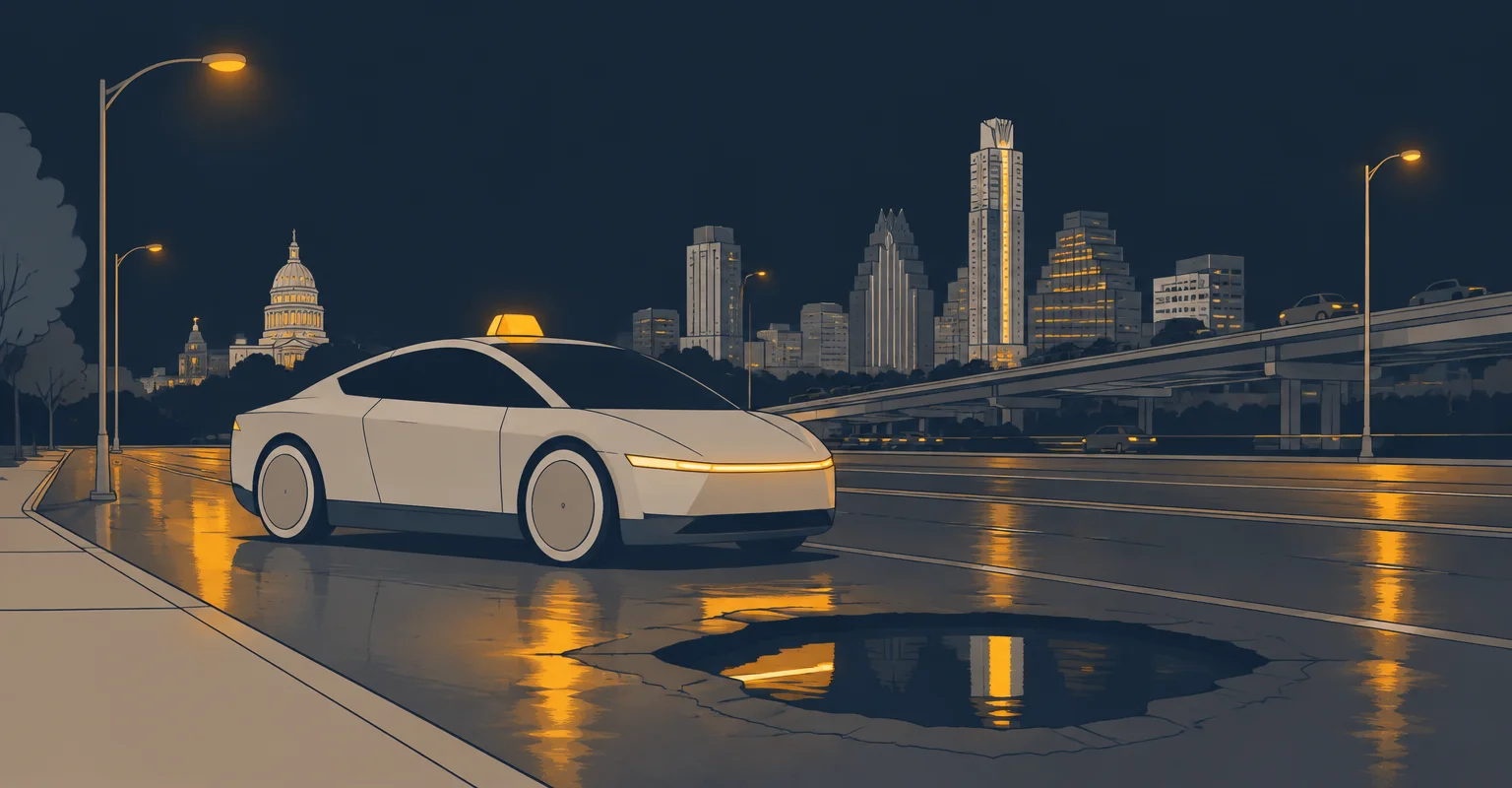
Tesla’s Cybercab generated eight crash reports filed with the National Highway Traffic Safety Administration in August and September, dividing evenly between four Austin incidents classified as automated-driving-system events and four tests with a human driver using Tesla driver assistance. The Austin ADS reports listed no injuries and speeds of no more than 5 mph; the test crashes included a 53-mph collision on a Philadelphia highway.
The four ADS reports all came from Austin around the Sept. 3 start of paid rides, according to reporting by Electrek and MLQ.ai. They included a Cybercab entering a water-filled pothole at up to 5 mph while carrying a safety monitor but no passengers; a rear-end collision after the vehicle stopped in traffic; a reversing vehicle striking it as it slowed to yield; and a low-speed encounter with a raised concrete edge, sidewalk and curb. Two of the four were not Tesla’s fault.
The Level 2 filings were different events involving a test driver aboard and a system listed as “Verified Engaged.” Tesla withheld the narratives as confidential business information, so the public records do not establish fault or how the system behaved. The cases included the 53-mph Philadelphia highway collision, a 5-mph Austin highway crash involving a minor injury and hospitalization, an 11-mph Lehi, Utah, intersection crash with a minor injury, and a Tampa highway incident in which a stopped Cybercab suffered property damage. Tesla does not operate Robotaxi in Utah and has no permit for automated-vehicle operation in Pennsylvania.
The filings do not themselves show that automation caused a collision. NHTSA’s Standing General Order requires manufacturers to report specified crashes when ADS or Level 2 assistance was active within 30 seconds, and the agency cautions that the resulting data are not necessarily representative because companies differ in recording and detecting incidents. ADS is designed to perform the full driving task within a defined operating domain; Level 2 systems require an engaged human driver.
As we reported Oct. 21, Tesla’s own safety dashboard said Robotaxi had driven about 3.1 million driverless miles through Oct. 18 without injuries, airbag deployments, or pedestrian and cyclist strikes. That dashboard covers autonomous driving without a safety monitor and does not mention the Cybercab test fleet. Tesla’s report includes collisions reported to NHTSA while Robotaxi drove autonomously, including instances involving remote assistance or control.
The wider NHTSA ADS release contained 43 unique Tesla reports, up from 22 in July. Across those reports, the highest pre-crash speed was 29 mph and the median was 1 mph; none occurred on highways. Tesla recorded 21 incidents on streets, 15 in parking lots and seven at intersections, consistent with Robotaxi’s low-speed routes inside geofenced service areas.
See also
- Tesla safety report claims zero injuries across 3.1 million Robotaxi miles
- Tesla’s Texas robotaxi registrations pass 500 as Cybercab count surges
- Tesla begins supervised Cybercab testing on Detroit roads
- Cybercab sightings beyond Austin geofence rise to 33 a week
- NHTSA reviews Tesla robotaxi school-zone speeding allegations